


Share This Article
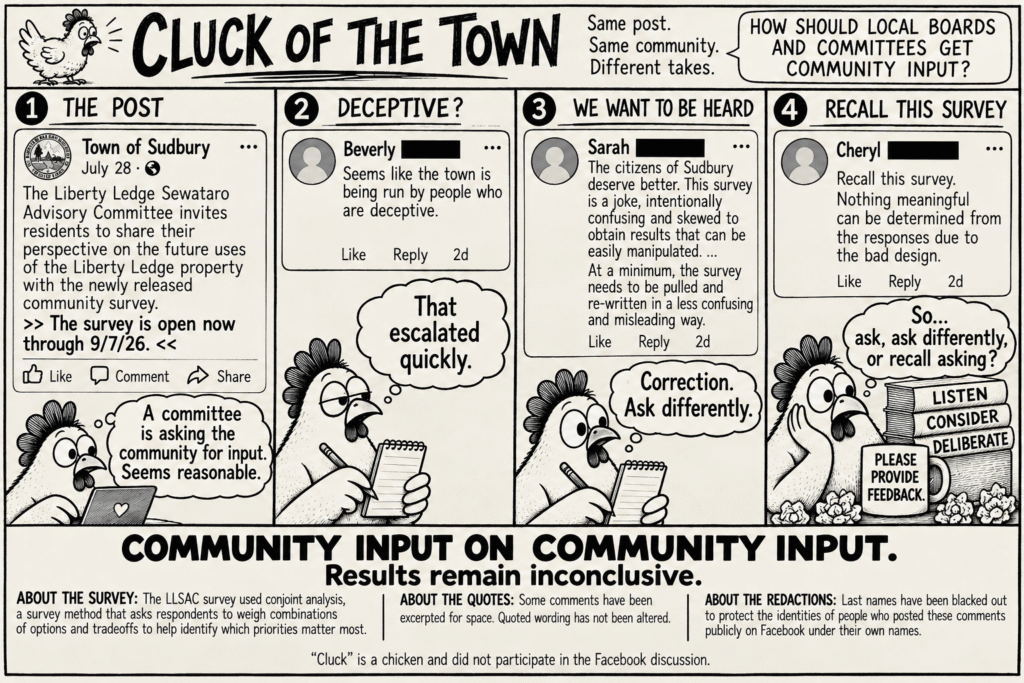
We talk a lot about transparency and accountability in local government, as we should. If you serve in elected or appointed office, people get to question you, disagree with you and criticize your decisions. Eventually, you have to say aye or nay and own that vote. There isn’t a middle vote. The vote, though, is really only the end of the story.
Transparency also means seeing how people get there, and that requires a surprising amount of vulnerability. Under Open Meeting Law, deliberation among a quorum of a public body happens in public, so even when you’ve done your homework, people get to see your thinking before it is finished. If we’re going to deliberate together, we have to think out loud.
That matters. I can ask an administrator a question privately and get an answer, but then my colleagues don’t hear it or get the chance to ask the next question. One question may lead to another or reveal something we hadn’t considered. Maybe our thinking changes. The discussion is supposed to matter, but there is risk in that.
In a world of sound bites, clips and social media posts, a question can become a position. Raising an issue can become having a “personal agenda.” A mistake can become a character judgment. Now AI can summarize hours of public meetings in seconds. That can be useful, but summaries can also go beyond what was said and infer positions or intentions that weren’t actually stated. When context disappears, unfinished thinking can look like a finished position.
There is an easier way to serve. Ask your questions privately. Wait to hear where everyone else is before offering your opinion. Or don’t say anything at all. Just vote. It may be easier on you, and on the people you love.
Meetings can be managed that way, too. Keep agendas “short and boring” and avoid topics of interest to the community where people might actually have to work something out in public.
But is that what we want?
Do we want elected and appointed officials to think out loud if that means saying something we disagree with, asking a question we don’t like or considering an idea they ultimately reject? Do we want them to raise issues the community cares about and ask what we think? That requires some vulnerability from us, too. Being heard doesn’t always mean being agreed with.
Can someone say “I don’t know yet” without that becoming weakness? Can they change their mind without us deciding they never had principles? Can they have an opinion without someone demanding a recall? When we disagree, can we stick to what actually happened and the issue itself without making it personal or bringing someone’s family into it?
Can we also separate disagreement with an outcome from failure of the process? A decision you dislike is not necessarily evidence that the process failed. We should hold officials accountable to the laws, policies and procedures governing their work, while recognizing that a fair process and robust deliberation can still produce a decision we wouldn’t have made ourselves.
The people serving on our local boards and committees are volunteers and our neighbors. They have careers, hobbies and families. They will sometimes get things wrong, change their minds or wish they’d said something differently. They are human. As my second grader often reminds me, “You can only do the best you can with what you have that day.” He is eight, but I think the standard holds.
This matters beyond the people already serving. Every January, nomination papers become available again. Some people start thinking about whether they want to run, and the rest of us start wondering who will. Maybe we should also ask what we are asking them to run into.
Running means knowing you will eventually make a decision that makes some neighbors angry. It means asking an uncomfortable question, admitting what you don’t know and sometimes being wrong in public. It means being willing to have the hard discussion. It may even mean changing your mind. Ultimately, you still have to raise your hand and own the vote.
Maybe the question before January isn’t only who will run or who we hope will. It is whether we are willing to make room for the vulnerability the job requires, and whether we are the kind of community that still makes people want to do it.

A brief but important disclaimer: These thoughts are entirely my own and do not represent the views of the Sudbury School Committee or the Sudbury Commission on Disability. If any of the above gets me sent to the principal, I assume I’ll be going alone.