



Share This Article
After 20 years as a school psychologist, and as a mother of four, Lara Urso understands what families go through when something isn’t clicking. At Threadline Psychological and Educational Services in Concord, she now offers a comprehensive set of services including psychoeducational evaluations and small social-emotional enrichment groups, all built on a strengths-based approach that helps families connect the pieces and understand their child more deeply.
We spoke with Urso about her approach, her work with children, and her vision for supporting local families. Whether you are actively seeking these services or just getting familiar with the issues as a newer parent, this interview covers what you need to know.
For more information, you can visit her website here: https://www.threadlinepsych.com/
To contact Threadline, you can email lara@threadlinepsych.com or fill out the form HERE.
A major cornerstone of Threadline Psychological and Educational Services is providing comprehensive psychoeducational evaluations. How do you approach these and how can it help families make educational decisions?
A major cornerstone of Threadline Psychological and Educational Services is providing comprehensive psychoeducational evaluations. My approach is grounded in looking at the whole child, teenager, or adult and understanding how all of the pieces come together to impact learning and day-to-day functioning.
I also believe that evaluations should not be one-size-fits-all. Every person comes to an evaluation with a unique set of strengths, concerns, experiences, and questions, so I tailor the evaluation to the specific needs of the individual and family. Most families seek an evaluation because they have concerns. Perhaps their child is struggling despite support, working much harder than expected, having difficulty keeping up with school demands, or not seeming to reach their potential. My goal is to understand why those difficulties may be occurring and, just as importantly, to identify the individual’s strengths.
I gather information from multiple perspectives, including parents or caregivers, teachers and other professionals when appropriate, and the individual themselves. The evaluation looks at how a person learns, which can include cognitive abilities, executive functioning and memory, attention, as well as academic skills in reading, writing, and math. I also consider social-emotional and behavioral factors that may be affecting learning or overall progress.
Bringing these pieces together can help answer important questions: Is there a learning difference or other factor interfering with progress? Are attention, executive functioning, or emotional factors making it harder to access learning? What are this individual’s strengths, and how can those strengths be used to support areas of difficulty? When appropriate, the evaluation can also provide diagnostic clarification and identify conditions such as ADHD or Specific Learning Disorder, including difficulties with reading (dyslexia), written expression (dysgraphia), or mathematics (dyscalculia).
Ultimately, I want families to leave an evaluation with greater clarity and a deeper understanding of their child, not simply a diagnosis or a set of scores. A comprehensive evaluation can help families understand what may be getting in the way of progress, communicate more effectively with schools, and make informed educational decisions about the supports and strategies that will help their child feel more confident and successful.
After 20 successful years as a school psychologist, what inspired you to branch out and launch Threadline Psychological and Educational Services?
After 20 years as a school psychologist, I felt ready to create something of my own that brought together the parts of this work that I have found most meaningful throughout my career.
Over the years, I have had the opportunity to experience this process from both sides of the table as a school and educational psychologist and as a parent. More recently, my own child was diagnosed with dyslexia, and that experience gave me an even deeper understanding of what it feels like to be the parent seeking answers, trying to understand what is getting in the way, and figuring out what to do next. It reinforced for me how important it is for families to feel heard, supported, and confident in the information they receive.
My experience working in schools is also a very important part of what I bring to Threadline. I have spent two decades working closely with students, families, teachers, and school teams, and I have a deep understanding of how schools operate and how special education processes and supports work. I understand the questions families are asking, the systems they are navigating, and how to translate evaluation findings into practical information that can be useful in the school setting.
As a mom of four, I also know how important it is to feel that the person working with your child truly sees them as an individual. At the core of Threadline is my belief that every child, teenager, and adult should feel important, understood, and supported. I want families to know that I am genuinely here to help them make sense of the pieces, understand their child’s strengths and challenges, and figure out what comes next.
That idea is really the heart of Threadline. The name comes from the idea that every individual has many different “threads,” their strengths, experiences, relationships, learning, emotions, and challenges and sometimes those threads can be difficult to make sense of on their own. My role is to help families connect those pieces and see the bigger picture.
I have also always loved working with children and teens in small-group settings, particularly around social-emotional development. There is something special about creating a small, supportive space where kids can practice skills such as emotional regulation, coping with frustration, flexibility, communication, friendship skills, and self-advocacy. Those experiences have been an important part of my work throughout my career and are another piece of what I wanted to bring to Threadline.
Launching Threadline has allowed me to bring my experience as a school psychologist, my perspective as a parent, and my passion for helping children and families into a more personalized setting. It is a way for me to do work that feels deeply meaningful while helping families feel a little more clear, supported, and confident along the way.
You describe your methodology at Threadline as “strengths-based, engaging, and supportive.” Can you walk us through what a strengths-based approach looks like in practice and how it helps a child build resilience?
For me, a strengths-based approach means looking at the whole person—not just the areas where they are struggling. When a child is having difficulty with reading, attention, organization, friendships, or emotional regulation, it can be easy for the focus to become centered on what is going wrong. I want to make sure we are also asking: What does this child do well? What comes naturally to them? What are they interested in? What motivates them? What positive qualities can we build upon?
In practice, that means getting to know the individual and making the process feel engaging and supportive. During an evaluation, I am not simply looking for areas of weakness. I am looking at patterns across cognitive abilities, academic skills, executive functioning, and social-emotional functioning to understand both strengths and challenges and how they interact. I also want the child or teenager to feel like an active participant in the process and to come away with a better understanding of themselves.
A strengths-based approach does not mean overlooking areas that need support. In fact, understanding challenges clearly is an important part of the process. The difference is that recommendations are developed with the whole person in mind and, whenever possible, use existing strengths, interests, and successful strategies as a foundation for addressing areas of difficulty.
I think this can play an important role in building resilience. When children understand how they learn, what they are good at, and what helps them succeed, they can begin to see that struggling in one area does not define them. That sense of self-understanding and competence can help children become more confident, more willing to try difficult things, and better able to advocate for what they need. Ultimately, I want children and families to leave Threadline with a clearer understanding of both “what’s hard for me” and “what I can do.”
You emphasize that Social-Emotional Learning (SEL) skills are foundational to a child’s lifelong success and well-being. Why is it so crucial for children to have opportunities to practice these skills outside of the traditional classroom setting?
Social-emotional skills are much like any other skills, they develop through practice, repetition, and real-life experience. Children may learn about emotions, problem-solving, communication, or perspective-taking in a classroom, but knowing what a skill is and being able to use it when they are frustrated, overwhelmed, or navigating a friendship challenge are two very different things.
That is why I think it is so valuable for children to have opportunities to practice these skills outside of the traditional classroom. A smaller, more relaxed setting can give children the space to try new strategies, make mistakes, talk through situations, and learn from one another without the pressure of academics or grades. Through games, discussion, role-play, and hands-on activities, children can practice skills such as emotional regulation, flexibility, coping with frustration, communication, perspective-taking, problem-solving, friendship skills, and self-advocacy.
These opportunities also allow children to practice skills in a way that feels relevant and meaningful to their everyday lives. They can explore questions like, “What do I do when things don’t go my way?” “How can I handle a disagreement with a friend?” or “How do I speak up when I need help?” The goal is to help children build a toolbox of strategies they can draw from at school, at home, with friends, and as they grow.
Most importantly, I want these experiences to feel positive. Social-emotional learning does not have to feel like another class or another area where a child is being told they need to improve. My goal is to create a supportive space where children can build skills, confidence, and self-awareness while having fun and feeling successful.
Threadline offers specific SEL enrichment groups. What does a typical session look like, and how do you go about creating a welcoming environment where kids feel safe to build meaningful connections with their peers?
A typical Threadline social-emotional enrichment session is structured, but intentionally relaxed and engaging. I want participants to feel like they are coming into a welcoming space where they can be themselves, not another classroom or a place where they feel like they are being evaluated.
Sessions usually combine a little bit of guided discussion with games, role-play, creative or hands-on activities, and opportunities for peer interaction. We might explore a specific skill or topic, such as managing big feelings, handling frustration, navigating friendships, being flexible when plans change, or speaking up for yourself. Participants then have opportunities to practice that skill in ways that feel natural and age-appropriate.
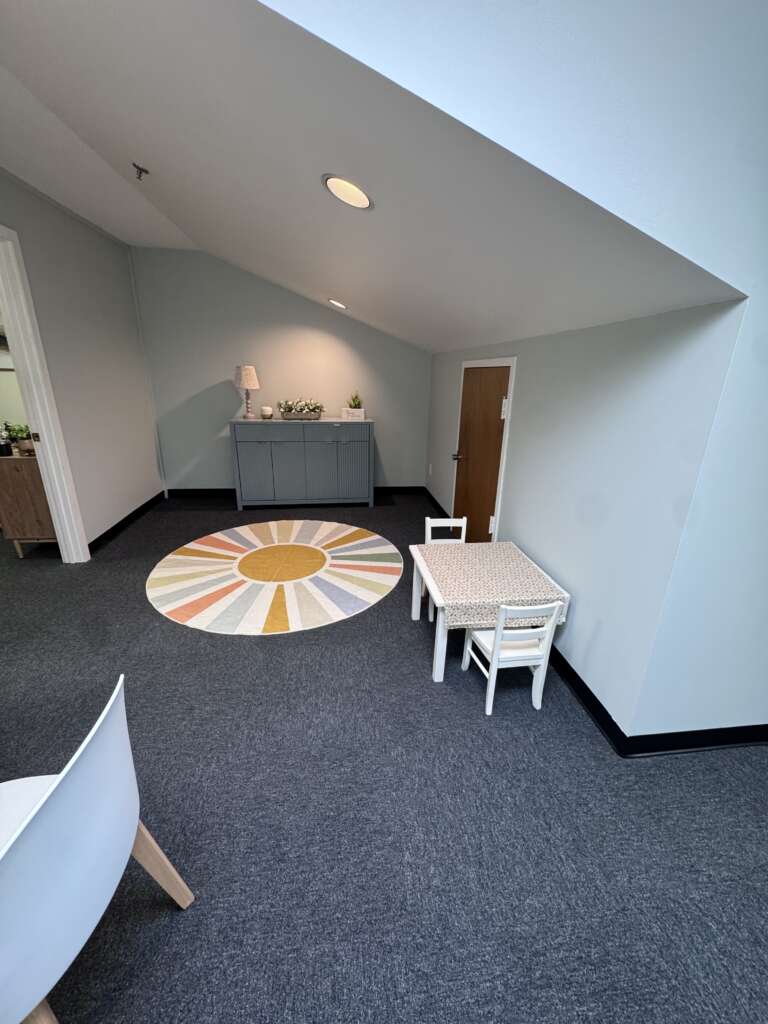
Creating a sense of connection starts with helping children feel known, comfortable, and accepted. I keep groups small so that everyone has an opportunity to participate, and I am intentional about creating an environment where there is no pressure to be perfect or have the “right” answer. We talk about the fact that everyone has strengths, everyone has challenges, and everyone is still learning.
I also find that meaningful peer connections often develop when children are given the opportunity to do something together, rather than being told to socialize. Games, collaborative activities, and shared experiences give children a natural way to talk, laugh, problem-solve, and learn about one another. Over time, those shared experiences can help children feel more comfortable taking social risks, expressing themselves, and building genuine connections with their peers.
Ultimately, my goal is for children to leave a Threadline group feeling more confident, more connected, and equipped with skills they can use in their everyday lives.
Your background includes working with students spanning from preschool all the way through high school. How do you adapt your social-emotional strategies to meet the vastly different developmental needs across those age groups?
One of the things I have really enjoyed throughout my career is working with children and teenagers at such different stages of development. The needs of a preschooler, an elementary-aged child, a middle school student, and a high school senior can look very different, and I think that perspective is one of the most valuable things I bring to my work at Threadline.
I have actually been asked many times which age group I prefer, and I honestly cannot choose one over the other. I love working with younger children because they are often so naturally curious, playful, and eager to learn new skills. With older students, I enjoy having more nuanced conversations about relationships, independence, identity, self-advocacy, stress, and the increasing demands of school and daily life. Both age groups bring something different, and I find both incredibly meaningful to work with.
That developmental perspective informs both my social-emotional work and my psychoeducational evaluations. In evaluations, I consider a child’s age and developmental stage when looking at cognitive abilities, academic skills, attention and executive functioning, social-emotional factors, and overall functioning. I am always thinking about what is developmentally expected, where a child may be experiencing difficulty, and whether those difficulties are interfering with their ability to learn, participate, or make progress. Just as importantly, I consider their strengths and how those strengths can support areas that are more challenging.
In my social-emotional work, I similarly tailor both the skills I am teaching and the way I teach them to be developmentally appropriate. With younger children, that might involve stories, games, role-play, visuals, and hands-on activities to practice emotional awareness, coping, flexibility, frustration tolerance, or friendship skills. With adolescents, the same foundational skills may be explored through discussion, real-life scenarios, problem-solving, and conversations about relationships, academic pressure, communication, self-advocacy, and increasing independence.
Having worked with students from preschool through high school, including seniors preparing for college or other post-graduation endeavors, has also given me a full developmental picture of where students start and where they are ultimately headed. I understand the skills that younger children can begin developing now that will help prepare them for later stages of development, while also understanding the skills older students need as they transition to greater independence and adulthood. That perspective influences the way I think about both evaluation recommendations and social-emotional skill building.
Ultimately, there is no one-size-fits-all approach. Being developmentally responsive means meeting each child where they are, understanding what is meaningful and appropriate for their stage of development, and thinking not only about what they need today, but also about the skills that will help them continue to grow tomorrow.
You help students develop self-awareness, emotional regulation, and problem-solving abilities. In your experience, which of these skills are children struggling with the most in today’s fast-paced world?
In my experience, one of the biggest areas of need I see is resilience and I think resilience is closely connected to emotional regulation and problem-solving. Many children and teens have difficulty tolerating frustration, navigating disappointment, handling mistakes, or sticking with something when it feels hard. They may know what they are supposed to do, but putting those skills into practice when they are upset, overwhelmed, or discouraged can be much more challenging.
There are so many demands on children today, and many feel pressure to keep up academically, socially, and through their activities and commitments. At the same time, I think it is important that children have opportunities to experience manageable challenges, make mistakes, problem-solve, and work through situations that do not go exactly as planned. Those experiences help build confidence in their ability to handle whatever comes next.
That is why I place so much emphasis on helping children develop the ability to pause, regulate, problem-solve, and try again. Resilience does not mean that a child never gets frustrated, anxious, disappointed, or overwhelmed. It means developing the skills and confidence to move through those feelings and believe, “This is hard, but I can figure it out.”
For me, that is one of the most important goals of social-emotional learning: helping children understand themselves, develop practical tools for managing challenges, and gradually build the confidence to navigate life’s inevitable ups and downs.
Having spent two decades navigating the public school system, how does the work you are doing now at Threadline bridge the gap between the support children receive at school and the breadth of needs you are seeing in children?
I think one of the most important things I bring to Threadline is my understanding of both what families experience and what schools see. After 20 years working within public schools, I understand the complexity of the school environment and the many factors that influence how a student is functioning from academic demands and curriculum rigor to classroom expectations, peer dynamics, and the supports already in place.
At the same time, through my work at Threadline, I am seeing just how broad and interconnected students’ needs can be. A child who is struggling academically may also be dealing with attention or executive functioning challenges. A student who understands the material may have difficulty demonstrating what they know because of anxiety, organizational difficulties, or slower processing. Social-emotional challenges can also affect learning and vice versa. Often, families are looking for help because they can see that something is getting in the way of their child’s progress, even when it is not immediately clear what that something is.
Many parents seek a private evaluation because they are seeing their child struggle and feel that something is not quite right. Sometimes the school is seeing those same concerns, and sometimes the picture is less obvious in the school setting. Parents may feel dismissed when their concerns don’t seem to match what is being observed at school, even though both perspectives can be valid. A private evaluation provides an opportunity to step back, gather information from multiple sources, and better understand the full picture.
My goal is to advocate for the individual while also building a collaborative relationship with the school. I don’t see the evaluation process as creating a divide between families and schools. In fact, I believe the most meaningful progress often happens when everyone is working from the same understanding of a student’s strengths, challenges, and needs.
Schools have an important perspective because they see students functioning in a real-world educational environment every day. They understand the academic expectations, social dynamics, classroom demands, and resources available within their particular setting. When I can bring together that perspective with parent input, the student’s own experience, and the information gathered through an evaluation, we have a much more complete picture from which to make decisions.
Ultimately, I want my work at Threadline to help bridge the gap between what a family is experiencing and what a school is seeing. That means asking thoughtful questions, listening to all perspectives, clearly communicating what the evaluation shows, and developing recommendations that are practical and meaningful within the student’s actual environment. I believe advocacy and collaboration can and should go hand in hand.
Now that you are established in Concord with programs like your Back-to-School Series and Fall Sessions, what is your ultimate vision for the impact Threadline will have on local children and their families?
My ultimate vision for Threadline is to become a trusted resource for children, teens, and families in Concord and the surrounding communities, a place families can turn to when they have questions about their child’s learning, development, social-emotional well-being, or overall progress.
I want Threadline to offer support at different points along an individual’s journey. For some families, that may mean a comprehensive psychoeducational evaluation that helps them understand why their child is struggling and what supports may help. For others, it may mean a small social-emotional enrichment group where a child can build confidence, practice skills, and connect with peers. I love that Threadline allows me to support children in both of these ways.
I also hope to continue expanding Threadline thoughtfully over time. As the practice grows, I may eventually add individual therapeutic services so that families have access to additional support within the same trusted practice. For now, my focus is on building a strong foundation in psychoeducational evaluations, parent consultation, and social-emotional enrichment.
Ultimately, I want families to feel that they do not have to navigate these questions alone. Whether a family is looking for answers, trying to understand an evaluation, preparing to work with a school, or simply looking for a place where their child can strengthen important social-emotional skills, I want them to feel heard, understood, and supported.
I also hope Threadline can help foster a more collaborative approach between families and schools. With my background in school psychology, I understand the school perspective, and I want to use that experience to help families make sense of what they are seeing, communicate effectively with schools, and advocate for their children in a constructive way.
At its heart, my vision for Threadline is really about helping families connect the pieces. Every child has their own combination of strengths, challenges, experiences, relationships, and needs. I hope Threadline can help families better understand those individual threads, recognize what makes their child unique, and feel more confident about how to help them grow and thrive.
Anything else to add?
One thing I would want families to know is that they do not need to have all the answers before reaching out to Threadline. Often, parents come to me because they simply know that something is not quite clicking. Maybe their child is struggling academically despite support, working much harder than expected, having difficulty with attention or organization, experiencing social or emotional challenges, or becoming increasingly frustrated or discouraged. Sometimes parents have very specific concerns, and other times they simply want a better understanding of how their child learns and what might be getting in the way.
I also know that parents often hear the term “neuropsychological evaluation” and wonder how that differs from a psychoeducational evaluation. While there is overlap, the purpose and emphasis can be different. Neuropsychological evaluations are specifically focused on understanding brain-behavior relationships and may look in greater depth at areas of neurocognitive functioning, particularly when there are medical, neurological, or more complex developmental questions.
At Threadline, my psychoeducational evaluations are designed to answer educational and learning-related questions. I take a comprehensive look at cognitive abilities, academic skills, attention and executive functioning, memory, and social-emotional and behavioral factors, while incorporating information from parents, teachers when appropriate, and the individual being evaluated. My goal is to understand the whole person, identify both strengths and areas of difficulty, and provide diagnostic clarification when appropriate. The evaluation can also give families valuable information and documentation to bring to conversations with their child’s school, including discussions about IEP or 504 eligibility, accommodations, and supports. While a private evaluation can provide important information to inform that process, eligibility decisions are ultimately made by the school through the appropriate team-based process.
Most importantly, I want families to know that there is no need to arrive with a diagnosis or even a clear idea of what type of evaluation they need. We can start with the questions and concerns that brought them to me and determine what type of assessment will be most helpful for their individual situation. Sometimes the first step is simply having a conversation about what they are seeing.
My hope is that families leave Threadline not only with answers, but with a clearer understanding of their child (or themselves) and a concrete sense of what comes next.
Threadline Website: https://www.threadlinepsych.com/
Contact: lara@threadlinepsych.com