


Share This Article
May is National Water Safety Month and the MetroWest YMCA is going all out with events from Red Cross lifeguarding certification, to swim classes for all age groups and even some water safety-specific demonstrations. We caught up with the YMCA to learn more about their efforts this month and beyond, and they were kind enough to share some of their knowledge on water safety with Sudbury Weekly readers.
The “Phones Down, Eyes Up” campaign targets a very modern distraction. How has the ubiquity of smartphones changed the landscape of water safety, and why is a dedicated “Water Watcher” so essential even when multiple adults are present?
With smartphones being used for just about everything under the sun, from a weather check, text or email, or looking up the best BBQ recipes, it’s easy to get distracted when you’re around water. We have to remember that the stats are staggering, with 88% of drownings occurring with an adult present. That’s why we want adults to dedicate a water watcher, someone whose sole focus is watching the kids in the water. This adult must be free of distractions, such as cell phones and social conversations. We recommend that Water Watchers should rotate every 20 minutes with another responsible adult, to allow for adults to have a break and time to socialize with others.
The statistic that 88% of child drownings occur with an adult present is staggering, as is the fact that drowning can happen in just 30 seconds. What are some of the biggest misconceptions parents have about what drowning actually looks and sounds like?
Many people believe that when a person is drowning, they make a lot of noise, splashing and calling for help. The depiction we see on TV and in the movies is rare in real life. Most drowning cases are silent and go unnoticed by other swimmers and bystanders.
May is National Water Safety Month, and you are hosting free events like the upcoming demonstration at the Clearbrook Swim Club. What specific, hands-on skills or knowledge can families expect to walk away with if they attend these sessions?
We will be offering water safety tips that anyone can implement at backyard pools and waterfronts this summer. We will also be demonstrating a few of the techniques we teach children (and adults) in our swim lessons, which help them learn how to right themselves and get to the poolside wall if they fall in, how to safely help someone else who has fallen in the water, and how to stay afloat.
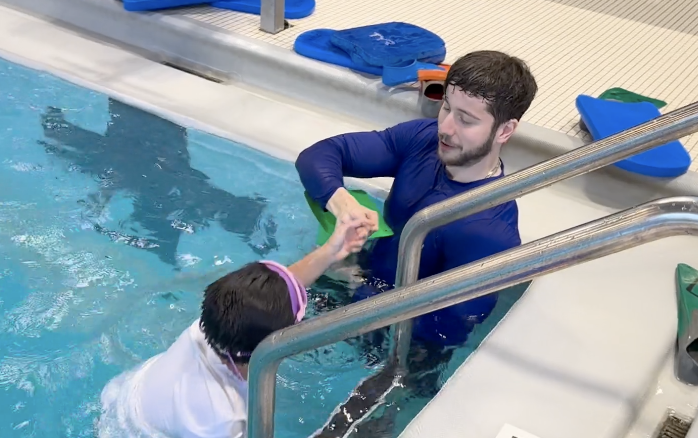
You noted that drowning is the second-highest cause of death for children ages 5 to 14, and that communities of color are at the highest risk. How is the MetroWest YMCA specifically addressing this disparity through its outreach and programming?
We know that groups that don’t have access to swim lessons for whatever reason are more at risk for drowning. At the Y, we encourage a family approach and will teach swim lessons to parents and their children, helping eliminate generations of fear of the water. This helps many families to work together to be safe around the water. The Metrowest YMCA also works hard to eliminate financial barriers, providing needs-based scholarships thanks to generous donations to our Annual Campaign, which allows families the opportunity to grow, learn, and thrive in all of our programs.
Your press release mentions that the YMCA believes financial concerns should never be a barrier to water safety. Could you elaborate on how your sliding-scale fees and annual campaign donations work to ensure equitable access to swim lessons?
At the YMCA, we believe financial concerns should never prevent someone from learning critical water safety skills. That’s why we work intentionally to remove cost barriers through sliding-scale pricing and financial assistance supported by our Annual Campaign.
Through our Y Assist program, families can apply for reduced program fees based on household income and individual circumstances, helping make swim lessons accessible to everyone. Meanwhile, Annual Campaign donations from community members, local businesses, and partners directly help provide scholarships and expanded access.
This community-supported model allows us to serve families from a wide range of backgrounds and ensures that more children can build confidence in and around the water. Water safety is not just a recreational opportunity — it’s a critical life skill, and we are committed to making sure everyone has the opportunity to learn in a welcoming and supportive environment.

The MetroWest YMCA offers lessons starting for children as young as six months old all the way up to adults. How does your approach to teaching critical water safety differ when instructing an infant or toddler versus an adult learner?
Water safety looks different at every age, so our teaching approach is tailored to each stage of development. For infants and toddlers, lessons focus on comfort in the water, parent-child bonding, basic safety habits, and building confidence through guided play and repetition. For instance, with infants and toddlers, we stress teaching them to ask for permission before entering the water, and encourage parents to reinforce this at home in the bathtub and in other water-based areas, such as swimming pools or beaches.
With older children and adults, instruction becomes more skill-based and individualized, focusing on stroke development, water competency, safety awareness, and overcoming fears or anxiety around the water when needed.
Across all age groups, our goal is the same: helping every participant build confidence, develop lifesaving skills, and feel safe in and around the water in a supportive, welcoming environment.
Beyond learning traditional swim strokes, how exactly is “critical water safety training” integrated into your standard summer camp curriculums and daily activities?
Critical water safety training is woven throughout our camp experience — not treated as a one-time lesson. Swim lessons are included as part of summer camp programming and are offered in addition to recreational swim periods, giving campers both structured instruction and supervised practice time in the water.
Our summer camp swim lessons follow the same quality curriculum as our year-round group lessons, meaning water safety is incorporated into every level alongside swimming skills development.
Beyond learning swim strokes, campers regularly practice age-appropriate water safety skills such as recognizing pool rules, safe entry and exit techniques, understanding lifeguard guidance, using the buddy system, and knowing what to do in an emergency.
Staff reinforce these skills daily through supervised activities, safety reminders, and confidence-building exercises designed to help children make safe decisions in and around the water.
Our goal is to help every camper not only learn how to swim, but also develop the awareness, confidence, and judgment that can help prevent water-related accidents.
For families heading to a backyard pool, local lake, or beach this weekend, what are the top three immediate steps they should take—aside from putting their phones down—to ensure a safe environment for inexperienced swimmers?
Make sure a responsible adult is in charge of watching your children anytime they are near the water or have access to the water. Plan to swim in areas near a lifeguard, read all posted signs and rules, and designate a “Water Watcher” to ensure a happy and fun time.