



Share This Article
In a revelation that has sent shockwaves through the local educational establishment, a new consulting report has concluded that teaching elementary schoolers a foreign language for just 40 minutes a week, without a formalized curriculum or instructional materials, somehow fails to result in fluency.
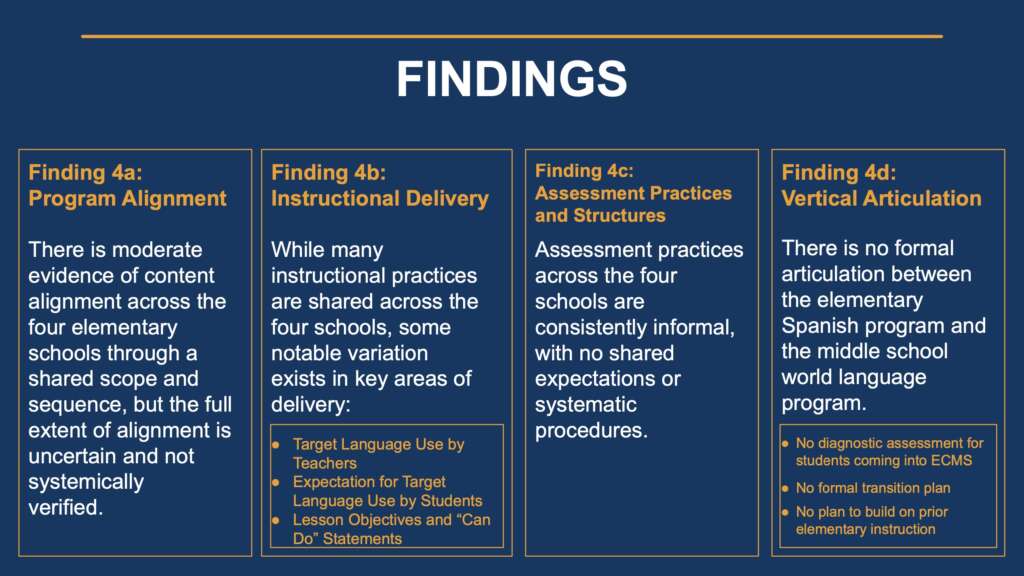
The stunning findings, presented at the October 19 Sudbury Public Schools School Committee meeting, were the result of a rigorous review by an education consulting group. The consultants cracked the case on why the district’s elementary Spanish program wasn’t quite hitting the mark: it turns out the program has no formally defined student outcomes, no district-provided instructional resources, and operates in complete isolation from the broader grade-level curriculum.
The report also noted that the program’s current scope and sequence documents function “primarily as planning tools rather than a fully articulated curriculum framework.”
The most staggering discovery of the night, however, was that practicing a language once a week for 40 minutes under “significant structural constraints” is apparently not the secret to mastering Spanish.
Furthermore, the consultants uncovered that there is “no formal articulation between the elementary Spanish program and the middle school world language program,” meaning there is no transition plan or diagnostic assessment for incoming 6th graders. If that single transition seems like an easy fix, don’t worry, the report reassured readers that there are major variations even between the four elementary schools themselves, including “no shared expectations or systematic procedures” for assessment practices or structures.
Middle schoolers, thrust into actual proficiency-based language classes, provided retrospective comments that confirmed the consultants’ theories. According to the presentation, sixth graders described the gap between elementary and middle school as “significant,” with one student painfully confessing, “I felt behind because I did not know anything coming into middle school.” The cultural learning component was also described as “spotty and fragmented,” leaving some students recalling “very little about people or places where Spanish is spoken.”
To remedy this educational mystery, the consultant offered a series of recommendations. These included wild, outside-the-box ideas like deciding to “Define and communicate program purpose and outcomes to all stakeholders” and attempting to “Build the curricular infrastructure necessary to support a coherent, cumulative, and consistently implemented learning experience.”
Should the district decide to actually redesign the program into a fully-fledged language model, the report warned it would require unprecedented measures, such as defining an actual purpose for the program, “Increased instructional time and frequency” and “Curriculum with clearly defined proficiency benchmarks.”
Until then, Sudbury’s elementary students will continue to enjoy their weekly 40-minute Spanish exposure, blissfully unaware of the middle school reality check awaiting them in the sixth grade.
There was discussion amongst the school committee during the meeting, but we are skipping past the details because we are still staring blankly at a wall. The nuances of municipal debate fade away when you read this passage in the report, explaining that it was an “exploratory” program, and unclear if the district intended to teach students the language in the first place:
“While the elementary Spanish program is consistently recognized as exploratory in purpose by elementary stakeholders, there is variability and ambiguity regarding whether language proficiency development is also an intended program purpose.”
The full report is on some page in the meeting packet below.