Share This Article
A Sudbury dentist experienced a stroke at 27, followed by heart surgery, and now, at 50, runs marathons.
Dr. Christy Kirk shares her story to encourage everyone to pay attention to what’s normal and what isn’t for their body, and to advocate strongly for themselves when their gut feeling is that a medical finding is wrong.
That story starts her senior year in dental school at Virginia Commonwealth University in Richmond. She and David Kirk had met there; he was a couple of years ahead of her. They had been married for two months, and David had gone back to Sudbury to check on plans to join his mother, Ann Kirk, and brother, James Kirk, in their dental practice here.
Christy Kirk was alone at home when she suddenly was unable to speak, one side of her body went numb, and she felt weak. “I knew something bad was happening. I couldn’t dial the phone, but I managed to go to a neighbor’s condo.” They were living in a building full of medical students and graduates. “He threw me in the car and drove me the mile to the emergency room.”
By that time, she could speak again, though she was stuttering, and her faculties were returning.
“I was 27 and healthy, in dental school and recently married. It looked like a stress event, maybe low blood pressure or low blood sugar.” She was sent home.
“I went home, but I realized the diagnosis had to be incorrect. That’s not a slam on medicine; diagnosis is hard,” and Kirk was not a typical stroke candidate. “But I had a day or two of not feeling normal. It’s why it’s so important to know your normal.”
As a teenager, Kirk had experienced episodes of being lightheaded but had learned to cope with them.
Now, she talked to another neighbor, a neurology resident, who “pulled strings and got me in for an MRI” which revealed an area of her brain damaged by the stroke.
“When they saw the stroke, they then came up with a list of possible reasons for it and began to test for each,” Kirk said. The diagnosis was a congenital hole in the wall of her heart; fetal hearts have such holes but they typically close before birth.
She was considering open heart surgery but her father, a retired dentist, had a friend who was a pediatric cardiologist who treated such holes in infants. He recommended a device made by Abbott used in minimally invasive surgeries to correct congenital heart defects and prevent strokes. Kirk had the device implanted and it worked.
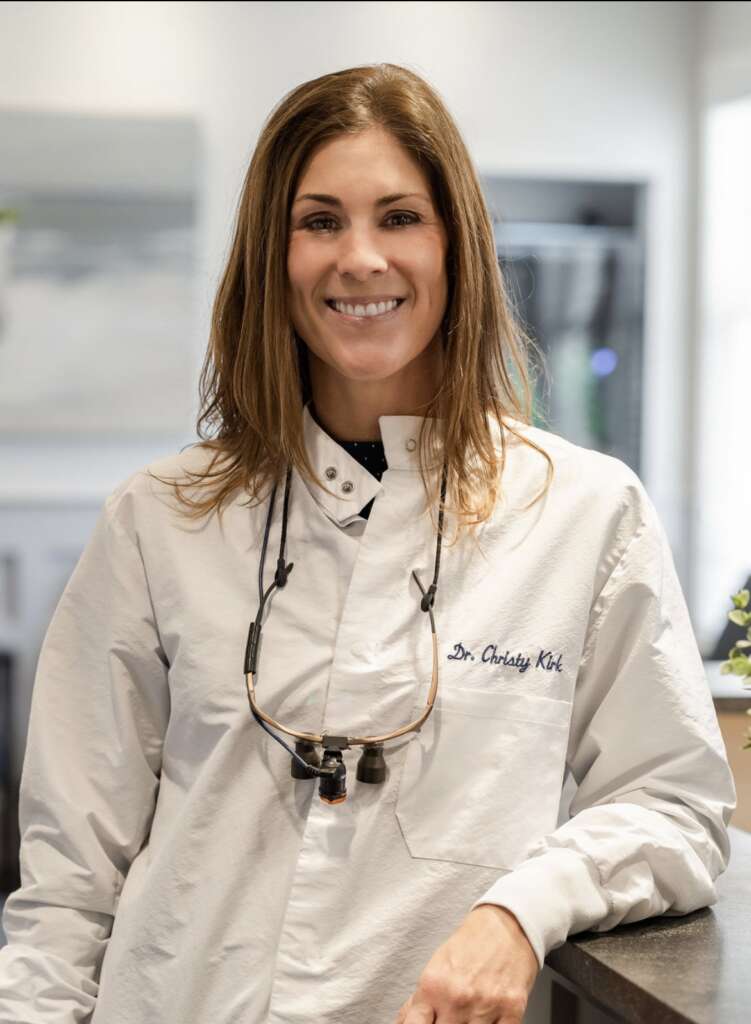
Since then, Kirk completed dental school, moved to Sudbury, and has had four children with David. Her first, a daughter now 21, was born only two years after the heart surgery. She did graduate work at Boston University and worked with another practice for a while before joining her husband and brother-in-law at Kirk Dental Associates in 2011.
And she’s run about 20 marathons. She has run the Boston Marathon three times on Tedy’s Team, organized by former Patriots player Tedy Bruschi, who had the exact same experience—a stroke caused by a hole in his heart.
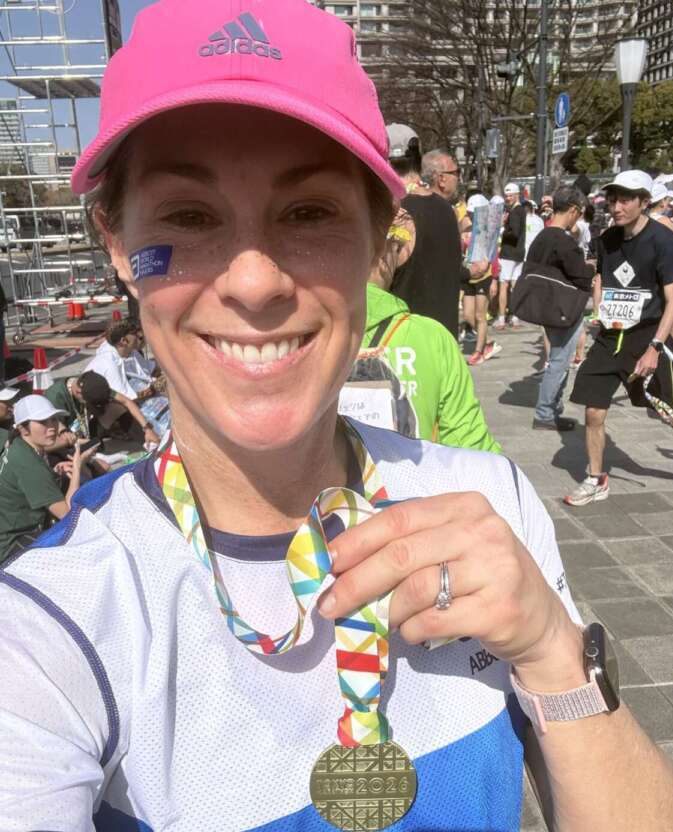
She has run marathons for Team Abbott as well, last year in Tokyo. Kirk also meets occasionally with the scientists at Abbott. “They seem to enjoy meeting someone who has benefitted from the work their company does, even if they didn’t work on my particular device.”
Kirk stresses the importance of everyone, but women in particular, advocating for themselves in medical situations.
“Know the norms for your body. If something feels wrong, go with your gut and seek more care. Be persistent if you don’t feel good. Denial comes into play. We want to believe doctors when they find nothing wrong. But you have to pay attention,” Kirk emphasized.
Nancy Brumback is a freelance reporter in Sudbury.