Share This Article
A Housing Adventure with Occam’s Razor…
Episode 3 of Saturday Night Live’s twenty-third season aired in 1999. It featured a recurring skit called “Celebrity Jeopardy.” In this installment, one of the clues was “This condiment is made from mustard seeds.”
The clue contained its own answer, but the contestants were too preoccupied with their own egos, or their deep desire to heckle the host, that nobody got the correct answer.
That brings us to the Sudbury Housing Trust (SHT), which has recently been advocating for the Town to explore affordable housing potential at the Liberty Ledge/Camp Sewataro property.
This has led to some criticism, in part, because a recent Town survey demonstrated significantly more opposition to housing on the property than support for it. The SHT has also been criticized for carrying a cash balance. So why exactly would this body advocate for housing on the Liberty Ledge site? And why are they holding onto a “cash balance?”
As it turns out, the answer is in their name.
The Metropolitan Area Planning Council (MAPC) describes housing trusts as follows:
“Affordable Housing Trusts (AHT) are public bodies enabled under state law that can hold money and property independent of the municipality itself, and it can use its holdings for affordable housing purposes.”
Let’s break that down for Sudbury specifically.
Sudbury (1) Housing (2) Trust (3)
So the local SHT is focused on the creation and preservation of affordable Housing (2), in Sudbury (1), and they fund their work through their Trust (3).
The members of the SHT are called “Trustees.” As in “a person or organization named to hold and manage property or money for the benefit of someone else.”
To keep things simple, trustees manage trusts, and mustard comes from mustard seeds.
Things get a smidge more complicated when you combine all the trustees. Then they’re called a “Board of Trustees.” It’s like animals. One owl is an owl. A group of owls is a “parliament.”
You can see the details written in the Town’s “Declaration of Trust” that outlines their powers and responsibilities.
There you have it.
The SHT is supposed to “provide for the creation and preservation of affordable housing in the Town of Sudbury for the benefit of low and moderate income households.” No matter which sub-page you visit on the SHT’s website page, that mission statement is prominently featured in the sidebar.
So are the trustees amassing funds in a trust for affordable housing? Yes.
Are they using the funds to create affordable housing? Yes. They recently bought a house to convert to an affordable ownership unit.
Are they doing their work in Sudbury? Yes, they are. There are no reports of the SHT buying houses in Wellfleet, North Adams, Weston, or any other towns.
Is this the work they are supposed to be doing? Yes, it is explicitly spelled out in their mission and founding documents. And they were created by Sudbury voters in a Town Meeting vote in 2006 to fill this role.
Notably, The SHT also runs a mortgage assistance program and a small grants program. Mortgage assistance is exactly like it sounds, and the small grants program provides “assistance to Sudbury residents to make repairs and alterations to their homes for safety and health reasons.” (More on their page.)
As For Liberty Ledge/Camp Sewataro…
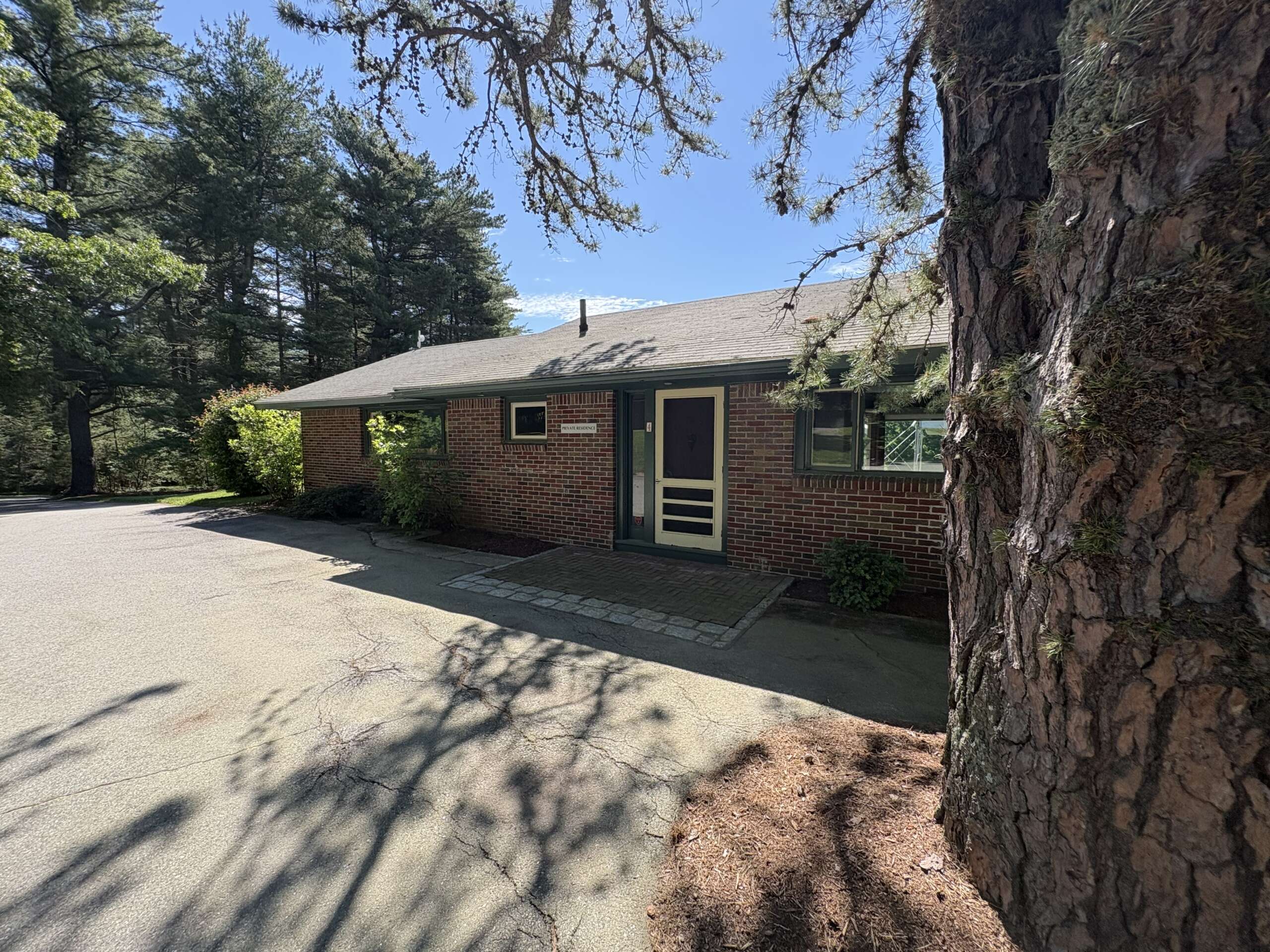
That brings us to Sudbury’s favorite topic: the 46-acre property on Haynes Road, commonly known as Camp Sewataro. Some residents have expressed dismay that the SHT is advocating for the Town to explore housing potential on the property. In their most recent meeting, they voted to approve the below resolution.
The resolution was voted hours before the Liberty Ledge/Sewataro Advisory Committee reviewed the results of a town-wide survey on preferences for uses of the property. That survey indicated significant opposition to housing on the property, and very modest support for housing. However, no housing development has been proposed. The SHT resolution calls for a professional land use study that includes exploration of the potential and suitability of housing on the Liberty Ledge property, not for the construction of any specific housing concept.
But why would a housing group advocate for consideration of housing potential when survey takers sent a clear signal to the Town that they don’t want housing on the property? In short, it’s the SHTs job to advocate for affordable housing.
Whether or not there is opposition, they’ve been asked to fill the role of housing advocates in Sudbury. Their job is to make the case, because they don’t actually have the authority to do anything at Liberty Ledge. Any development there would need to get a favorable vote from Town Meeting. The residents ultimately decide, not the Housing Trust.
But why even touch Sudbury’s third rail?
The members who voted may all have their own individual reasons. But there are several publicly available explanations hiding in plain site.
The first is that Liberty Ledge was identified as a “study parcel” in the Town’s 2025 Housing Production Plan, which was approved by the Select Board and Planning Board. Broadacres Farm on Morse Road is the only other “study parcel” named in the report. (Page 24 below)
In that context, it’s rather unsurprising that the the SHT would want to study housing potential at a named “study parcel” in the Town’s recently-minted housing plan when a Town committee is actively studying the potential future uses of that same property.
[Editor’s Note: it’s oddly satisfying to say “Study the study parcel” out loud, and repeatedly.]
Liberty Ledge wasn’t the SHT’s top priority. The SHT has been actively evaluating the potential of the land adjacent to the Sudbury Fire Station on Hudson Road. That property was cited as “developable land” in the Housing Production Plan, not a “study parcel.” Once a planning conversation commenced with the formation of the Liberty Ledge/Sewataro Advisory Committee, the SHT weighed in on the future uses from a housing perspective, as one would expect from people tasked with creating affordable housing.
The second piece is anchored in the politics of housing in Massachusetts and beyond.
Polling shows that housing has tremendous public support across Massachusetts. A MassInc poll commissioned by Abundant Housing Massachusetts, showed “71% say building more homes people can afford is more important than protecting traditional neighborhood character, and 63% say it matters more than preserving local control over what types of housing get built.”
But population-scale data doesn’t always align with hyper-local interests. Research from Boston University uncovered that neighbors of proposed housing show up disproportionately to oppose the projects. The researchers reviewed zoning hearings in eastern Massachusetts at scale and found that only one in seven comments were favorable to the proposed housing development.
In short: while the vast majority of people in Massachusetts support housing in the abstract, the neighbors that actually engage in the housing/permitting/zoning process overwhelmingly oppose them.
Housing advocates have to deal with that tension on a daily basis. While their mission is broadly supported, they know there will almost always be intense neighborhood opposition to any study, concept, or formal proposal they put forward.
Even though the SHT has not advanced any housing proposal at Liberty Ledge, one resident recently called the SHT “SHT heads” on social media. Another accused them of being “financially incentivi[z]ed to pursue development plans.” Another described their actions as “corruption.”
If housing advocates try to create housing, they know they’re going to get intense pushback, and sometimes personal attacks. If they stay silent, they’re simply not doing their jobs. The politics of housing from coast to coast regularly leaves advocates with few easy choices and a healthy dose of burnout. One prominent member of the “YIMBY” (Yes In My Back Yard) movement in California wrote an essay simply titled “It Shouldn’t Have Been This Hard.” He lamented the infighting and the lack of progress in addressing the housing crisis as he announced he was shifting away from advocacy work and into research.
To Study or Not to Study?
So why would the SHT advocate for the study of housing potential on the Liberty Ledge property in the first place? What makes it worth subjecting themselves to the inevitable criticism and opposition?
Scarcity is one obvious reason. The Housing Production Plan only identified three pieces of “developable land” and two study parcels for housing. One of the developable parcels is Frost Farm, where there’s already age-restricted housing. The other two are on main roads (Route 20 and Hudson Road), and that Hudson Road parcel is actively being evaluated by the SHT.
Notably, Camp Sewataro was the third-most mentioned site for affordable housing in the survey the Town conducted to gather input for the Housing Production Plan. (Although that survey did not garner widespread participation.)
Of all the land that the Town of Sudbury owns, just five tracts of land made it into the plan. There just aren’t many options to choose from if abiding by the plan. Two of those tracts (Route 20 and Hudson Road) are not developed. The other three, including Liberty Ledge, Broadacres Farm and Frost Farm, have housing and infrastructure on the property already. In theory, Hudson Road would be the bigger lift and more speculative parcel to pursue.
Despite that, the SHT has primarily been focused on studying Hudson Road and the acquisition of market-rate houses.
A big motivator for housing in Sudbury is that the Town has to maintain a certain ratio of affordable units within its housing stock to remain protected from hostile 40B developments under State law. While the town is largely built out, private construction of a handful of single family houses each year eventually adds up, and can help (among other factors) push the Town below the threshold. If the ratio starts trending towards falling out of safe harbor, or the State raises the threshold, the Town would almost certainly want to have a game plan to control its own fate. The Housing Production Plan is part of that plan. Pre-studied parcels, if even just five of them, make it clear what viable options the Town has available to maintain compliance.
That part about the State is important to keep in mind. The legislature has taken action to reduce local control over housing and zoning in recent years. It passed laws allowing accessory dwelling units by right, it passed the MBTA Communities Act to reshape local zoning, and the latest economic development bill contemplates allowing duplexes by right across the state.
If Sudbury wants to control its fate, a portfolio of unrestricted Town-owned land is a huge asset. But it’s useless if the land isn’t buildable. The SHT is doing the work to determine buildability on one of the five parcels named in the Housing Production Plan, and it’s advocating for the Town to do the same work at Liberty Ledge as part of a professional land use study.
Is that a slippery slope towards inevitable housing development or a genuine attempt to do robust long-term planning for local housing needs?
That’s something every resident gets to decide for themselves. But two things are certain: there is no current proposal for housing development at Sewataro, and mustard comes from mustard seeds.